Indigenous Peoples at Ferry Farm
Indigenous artifacts found at Ferry Farm include projectile points, stone tools, waste from tool manufacture, animal bones, and early forms of fired clay pottery. These finds are mostly found along the edge of the terrace that overlooks the Rappahannock River flood plain. By the Middle Woodland (2500 to 1100 years ago), Ferry Farm lands had been largely abandoned, perhaps because it was in a physical space between competing groups of Native Americans.
Paleoindians - 10,000 to 14,500 Years Ago
The earliest projectile point recovered at Ferry Farm is a broken, fluted Clovis point that was made sometime around 13,000 years ago. It is made of chert, a hard sedimentary stone that fractures into sharp glass-like breaks.
Experts in prehistoric materials have identified a second possible paleo point but this tool is made of quartz. Found in the plowed soil on the north end of the site, this point was resharpened numerous times. Several Paleoindian camp sites have been excavated in Virginia including the Williamson Site, Thunderbird, and Cactus Hill.
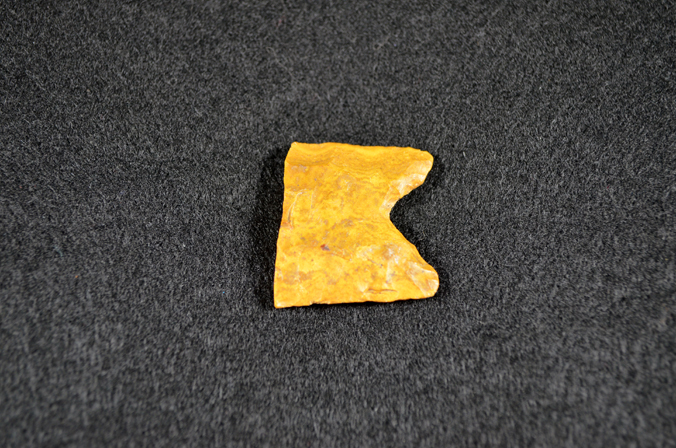
Clovis Point
Credit: The George Washington Foundation
The Archaic Period (10,000 to 3,000 years ago)
Climate change marked by a shift from a cold, moist glacial climate to a warmer, drier climate along with the extinction of megafauna paved the way to the emergence of the Archaic Period (10,000 to 3,000 years ago). Native Americans in the Chesapeake region began using new types of projectile points. They also developed and/or refined tools such as atlatls, stone axes, mortars and pestles, and ground stone axes, to adapt to a changing environment and resource availability.
Ferry Farm archaeologists have recovered a variety of Early Archaic projectile points (10,000 to 8000 years ago) including Big Sandy, Brewerton Side-Notched, St. Albans Bifurcate, Decatur, Kanasha, Kirk Corner-Notched, Kirk Stemmed, Lost Lake, MacCorkle, and Palmer Corner-Notched. They also recovered multi-purpose chipped axes which were used for butchering animals, digging, and cutting wood.
During the Middle Archaic Period (8,000 to 4,500 years ago) the climate in the Chesapeake region continued to warm and as a result deciduous forests and inland wetlands began to dominate.
New projectile points were introduced to Virginia including varieties of Halifax, Brewerton, Chesapeake Diamond, Clagett Side Notched, Guilford Lanceolate, Morrow Mountain 1 and 2, Normanskill, Otter Creek, and Stanly. These blades are generally broad, triangular blades with a variety of bases. The full grooved axe also came into being during this period.
During the Late Archaic and Transitional period (5,000 to 3,000 years ago) Native Americans camped at Ferry Farm leaving behind many different types of artifacts. During the Late Archaic period in Virginia, populations increased, with the emergence of more complex social structures. These groups began domesticating wild plants to supplement their diets.
At Ferry Farm, archaeologists have recovered projectile points from the Late Archaic including Orient Point, Bare Island, Holmes, Susquehanna Broadspear, Lamoka Stemmed, Perkiomen, Poplar Island, Savannah River, and Culpeper. They also found grooved stone axes used for cutting and shaping trees into canoes. Soapstone bowls became popular during this period, but none have been found at Ferry Farm.
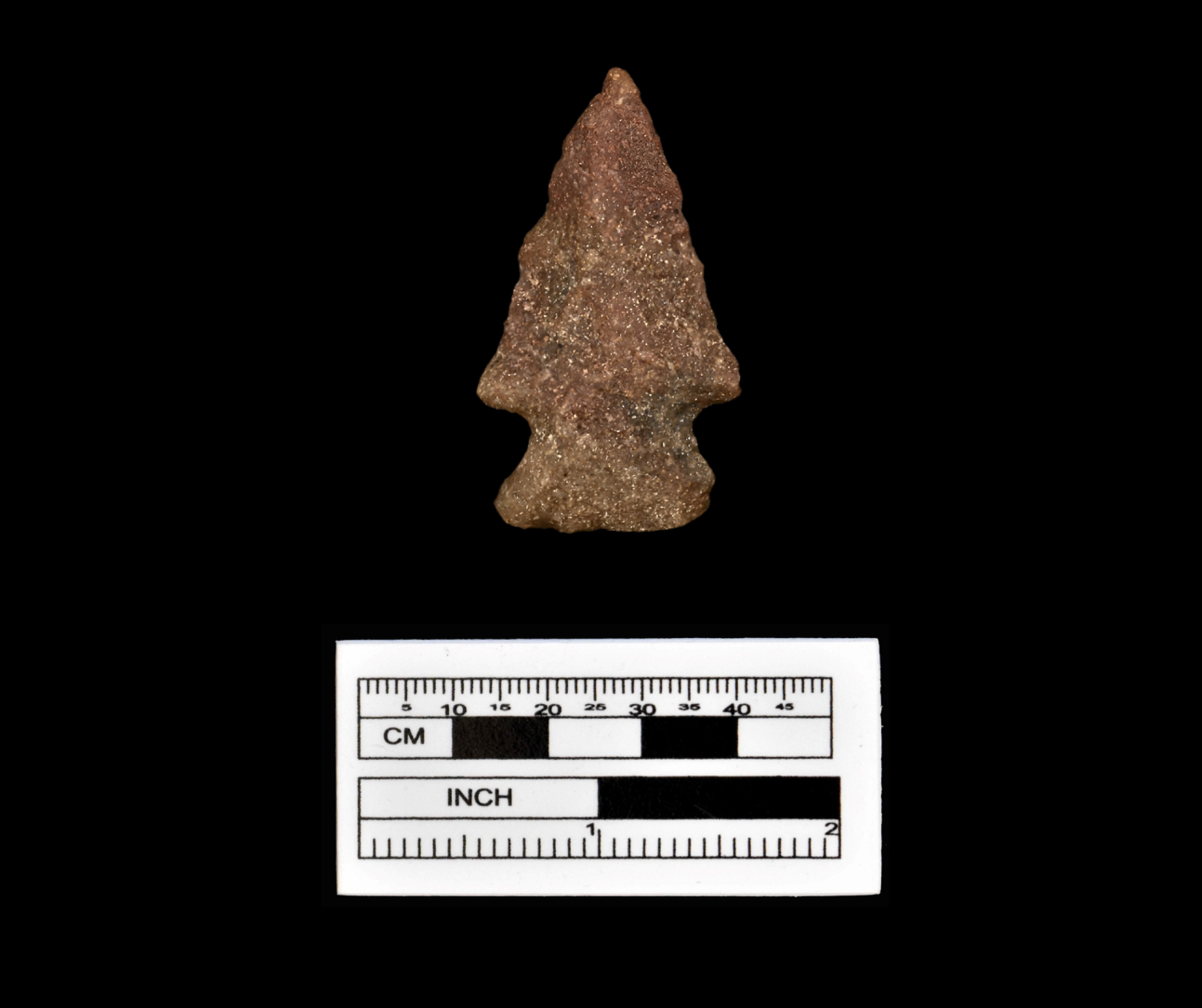
Kirk Side Notched Projectile Point
Credit: The George Washington Foundation
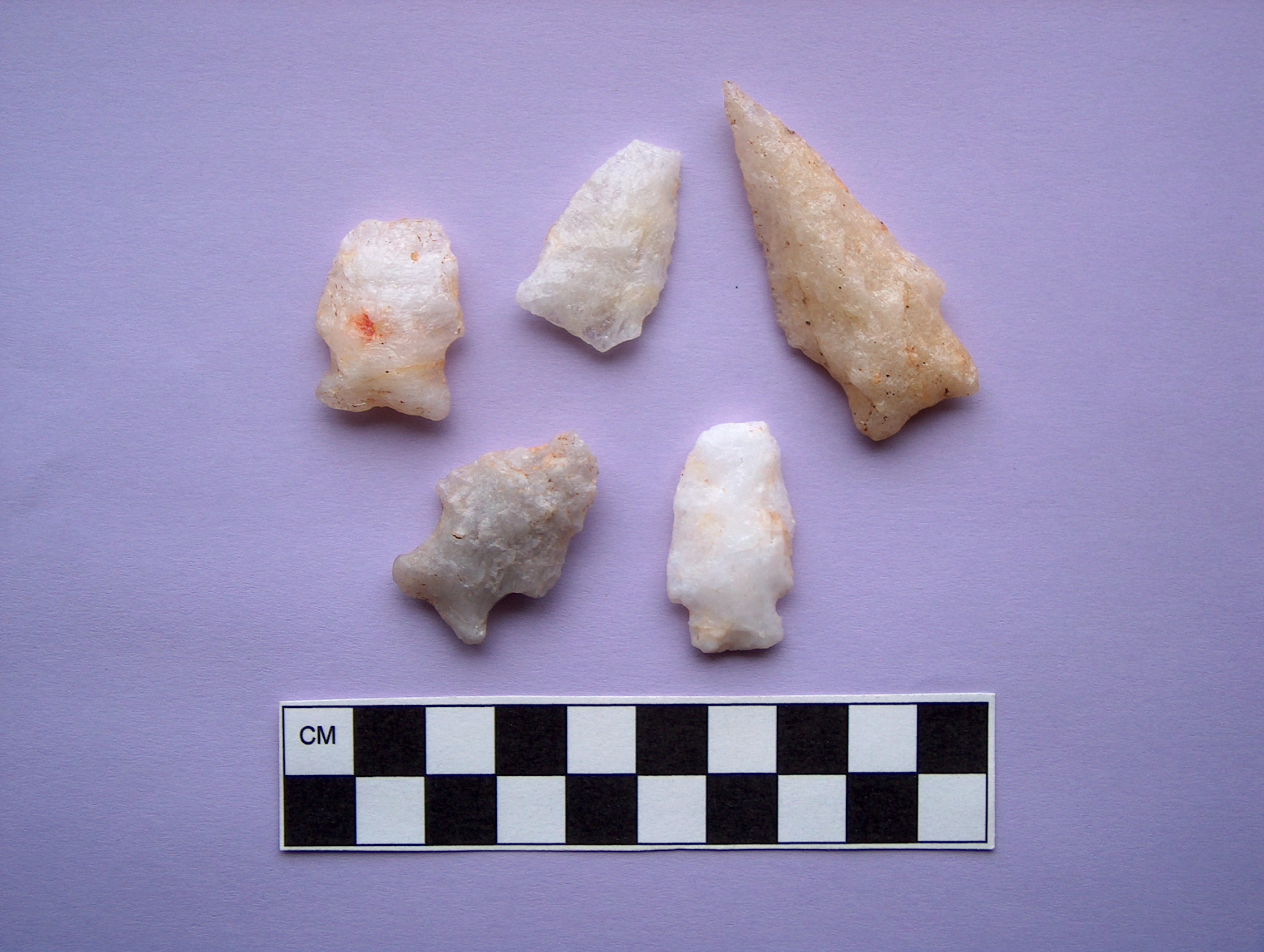
Early Archaic Quartz Projectile Points
Credit: The George Washington Foundation
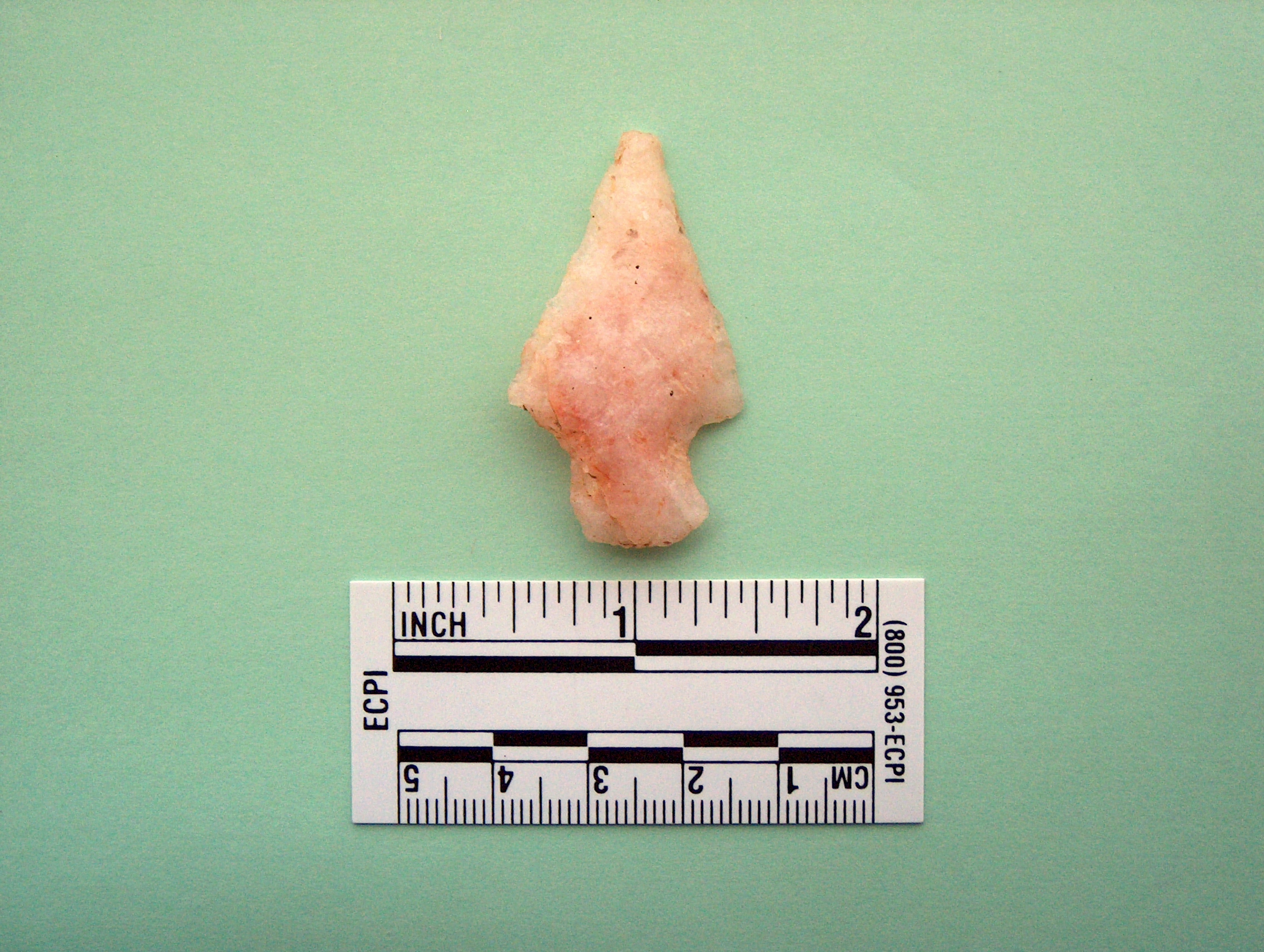
Middle Archaic Point
Credit: The George Washington Foundation
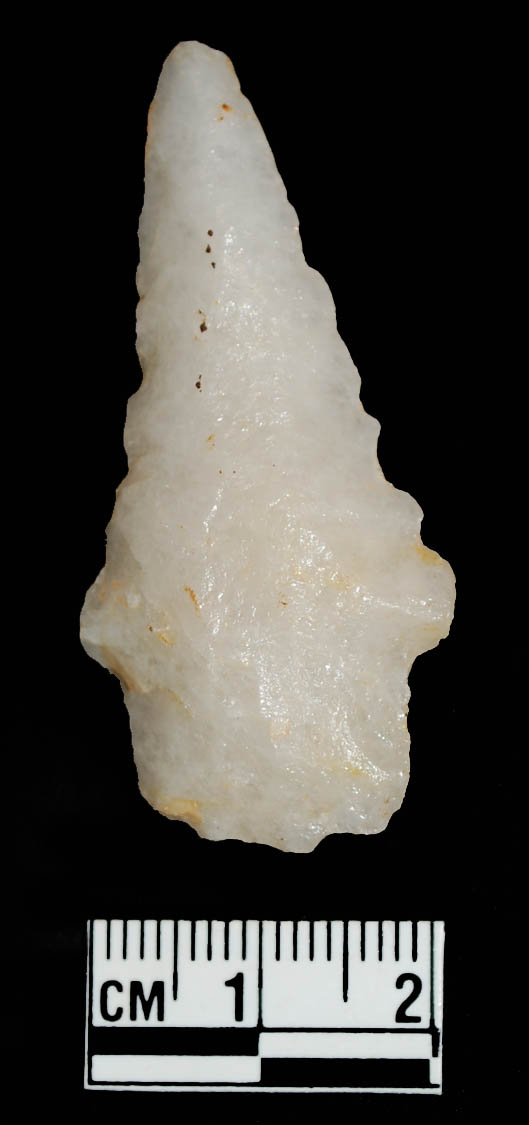
Kirk Side Notched Projectile Point
Credit: The George Washington Foundation
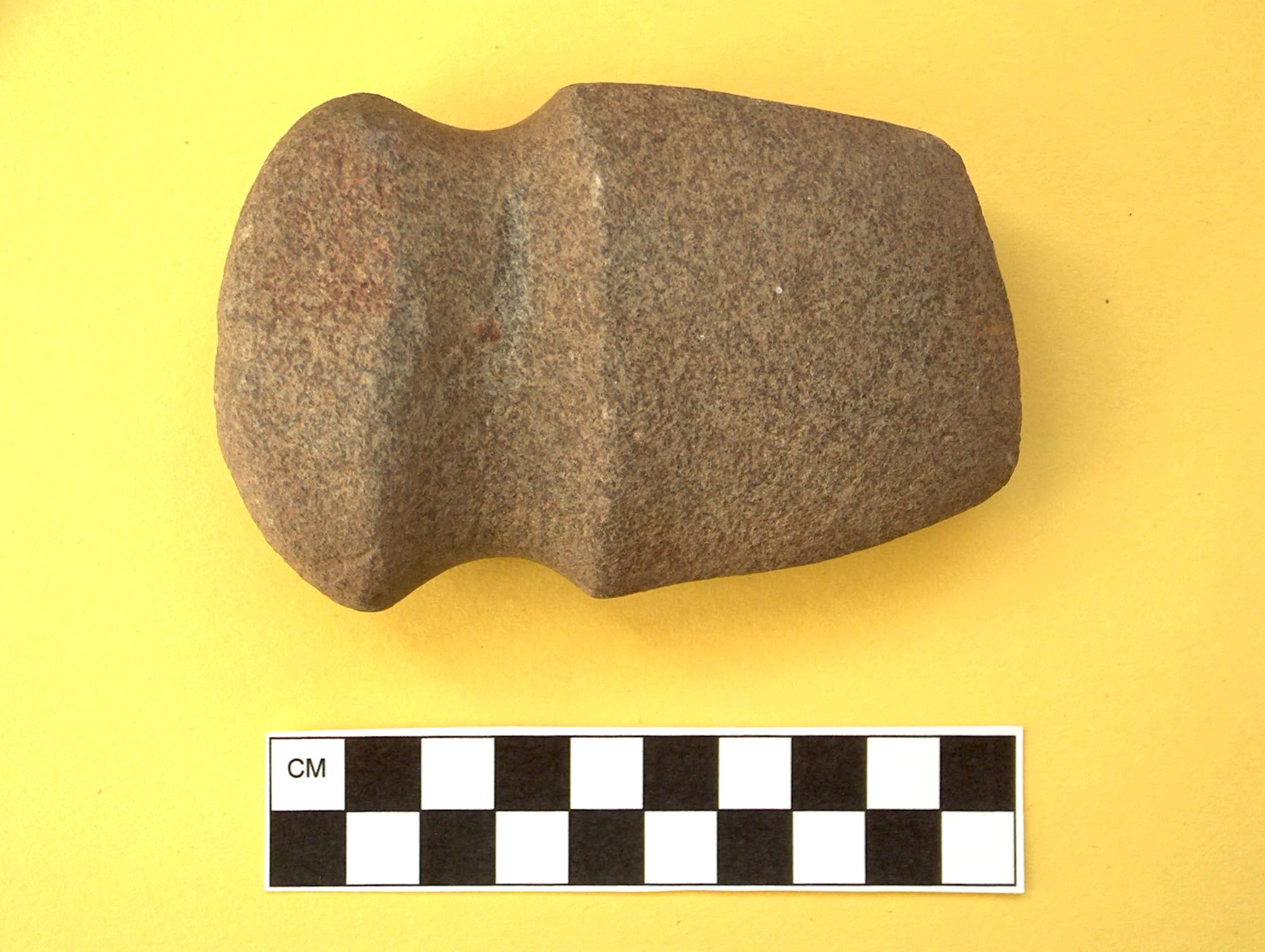
Stone Axe
Credit: The George Washington Foundation
Early Woodland Period
About 3,000 to 2,300 years ago, the Early Woodland period began with more sedentary settlements situated in the extensive woodlands along the Eastern United States. The introduction of clay pottery for cooking and food storage was an upgrade over soapstone bowls and plant or animal skin vessels. While no remains of housing have been identified at Ferry Farm, several pits have been identified and excavated. Charcoal from one of these pits provided a carbon date of 2450 +/- 30 BP or approximately 2500 years ago. In the same pit was Accokeek pottery, an Early Woodland pottery type first identified in Maryland. Ferry Farm archaeologists have recovered over 500 sherds of this type of pottery. Usually Accokeek pottery has surface treatment, with Ferry Farm examples including plain, impressed and cord marked varieties. While almost all the fragments are body sherds, Ferry Farm does have an example of a handle lug found in a cultural layer near a large Early Woodland pit.
Early Woodland projectile points include Piscataway, Savannah River, and Vernon Group.
The Early Woodland occupants of Ferry Farm probably did not practice agriculture but were inching closer by developing tools necessary for farming. The pits uncovered at Ferry Farm indicate a repeated seasonal occupation. The Early Woodland settlement at Ferry Farm was more sedentary than its Archaic predecessors. No evidence of housing has been uncovered yet, but different types of pits have been excavated along the edge of the terrace that overlooks the Rappahannock flood plain.
Just a handful of Middle and Late Woodland projectile points have been recovered at Ferry Farm indicating that it was abandoned after the Early Woodland period.
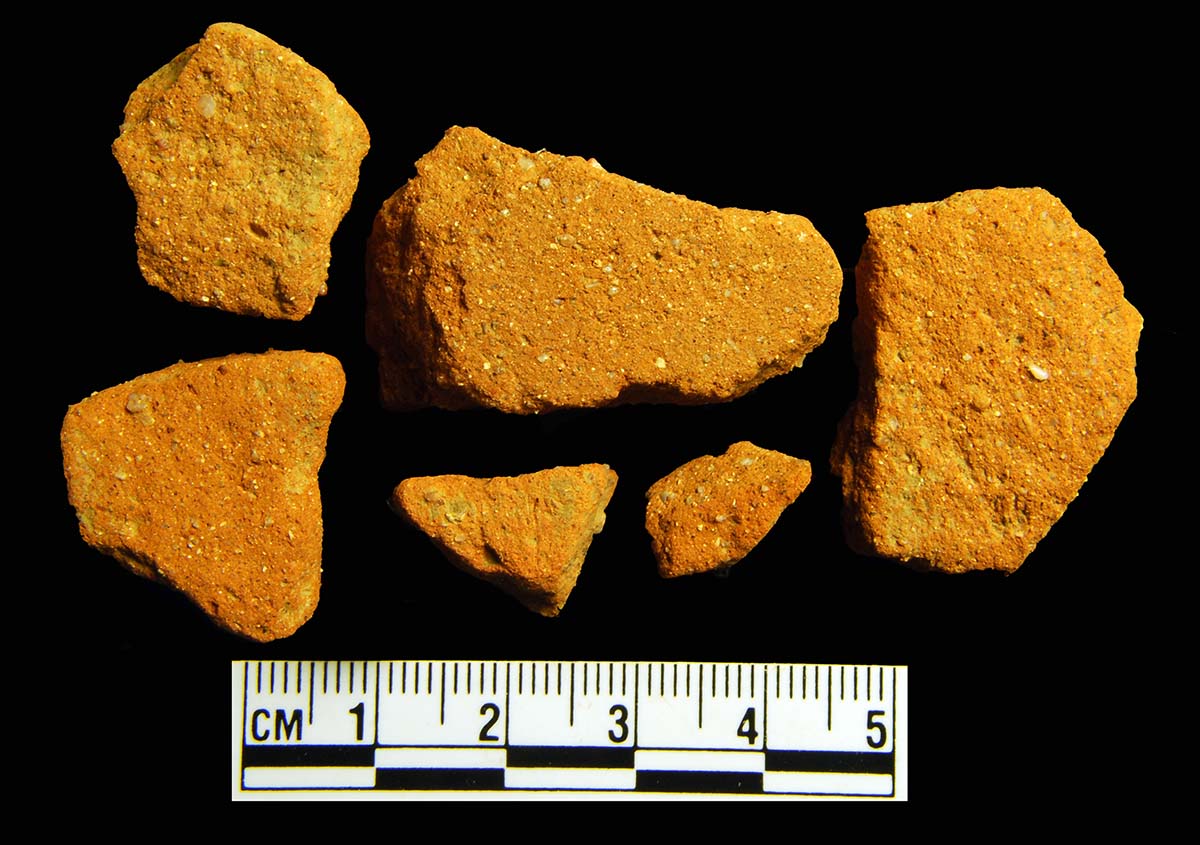
Accokeek Pottery
Credit: The George Washington Foundation
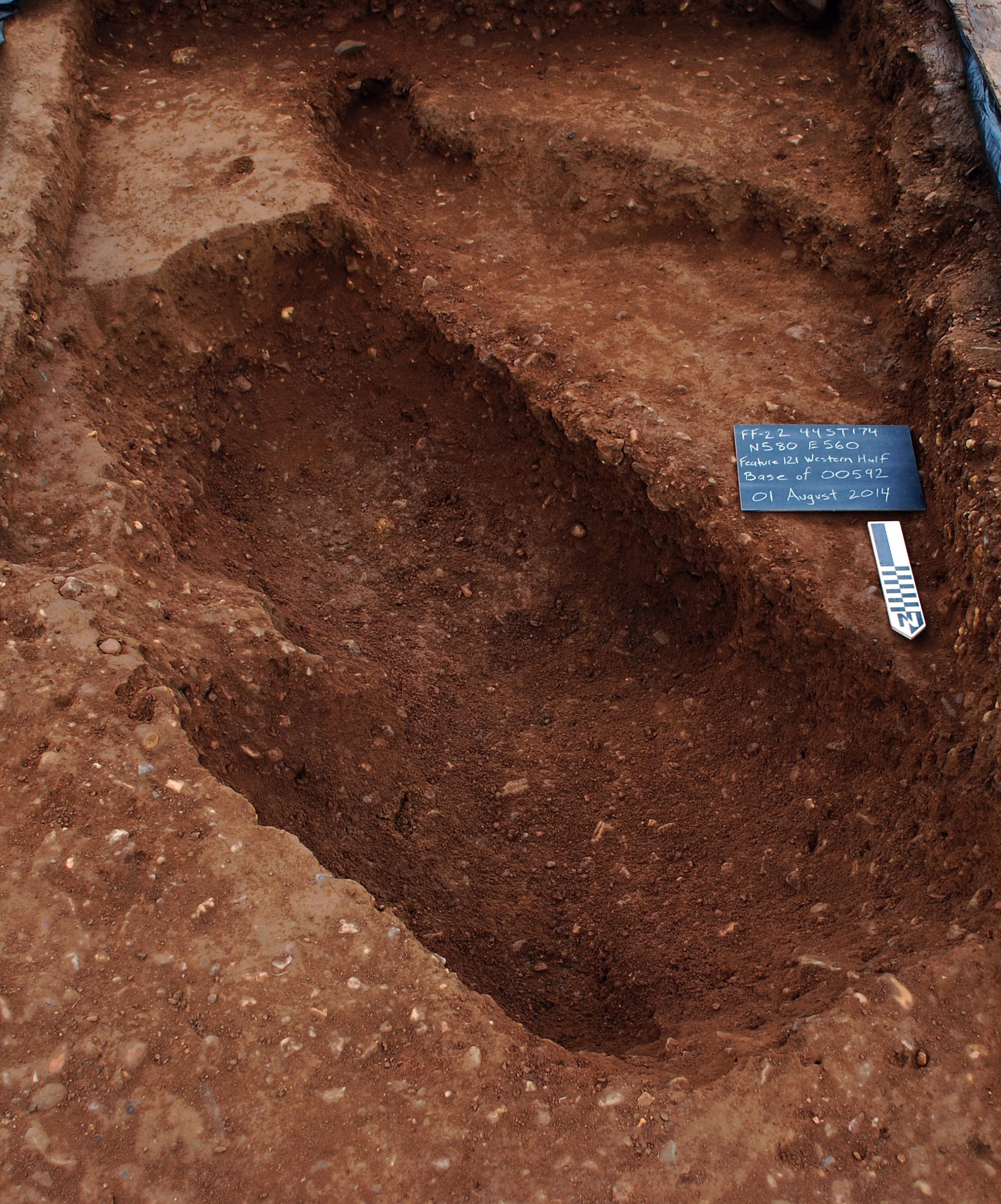
Prehistoric Feature
Credit: The George Washington Foundation
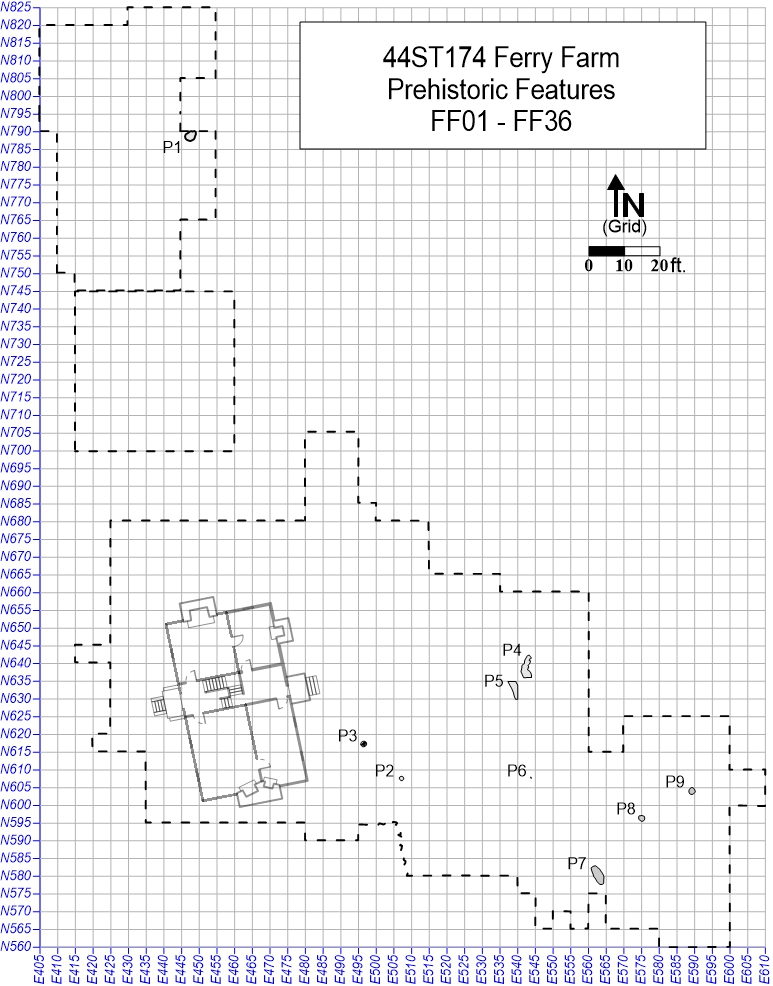
Early Woodland and Prehistoric Feature Map
Credit: The George Washington Foundation
Stone Axe
Credit: The George Washington Foundation
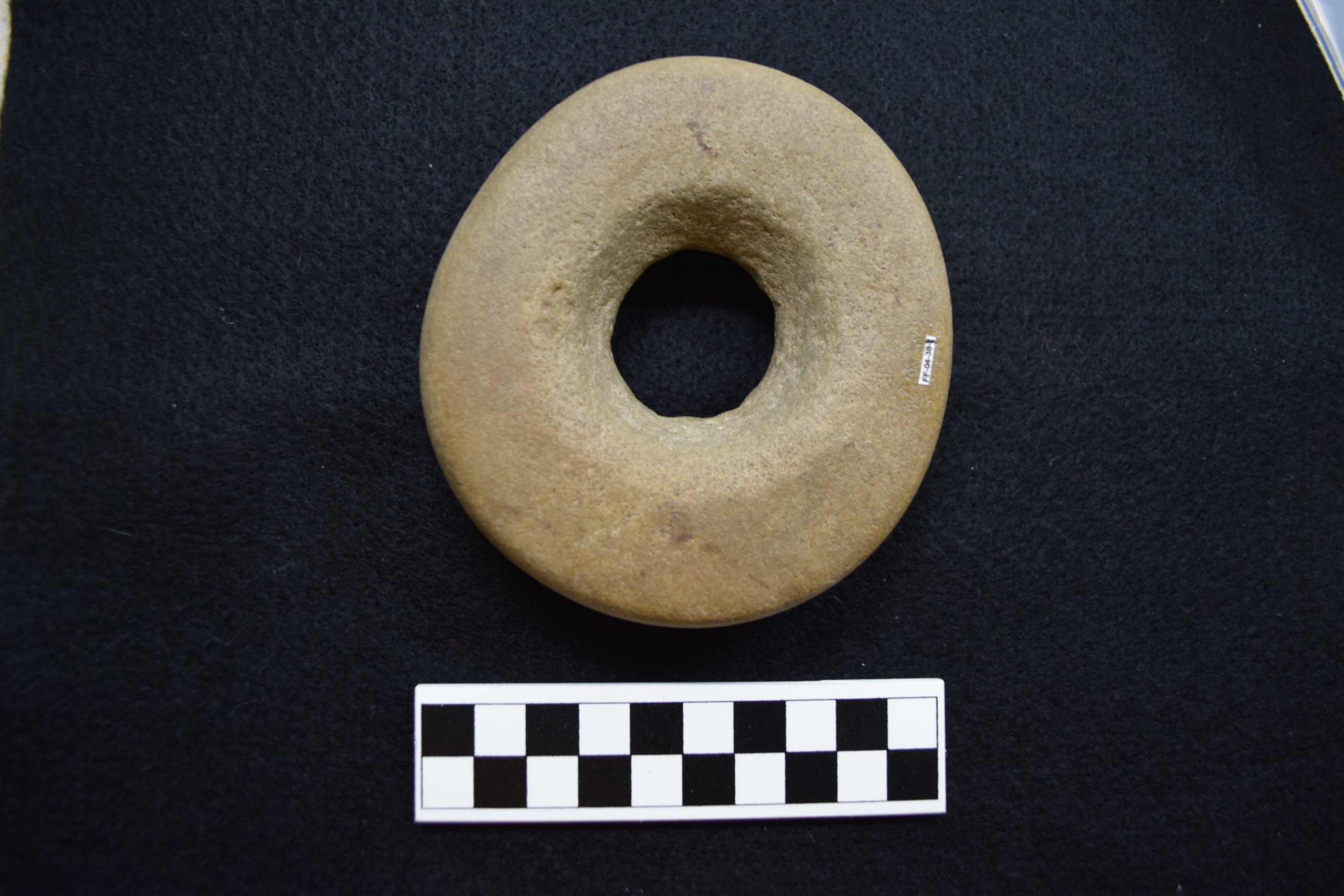
Chunkey Stone
Credit: The George Washington Foundation
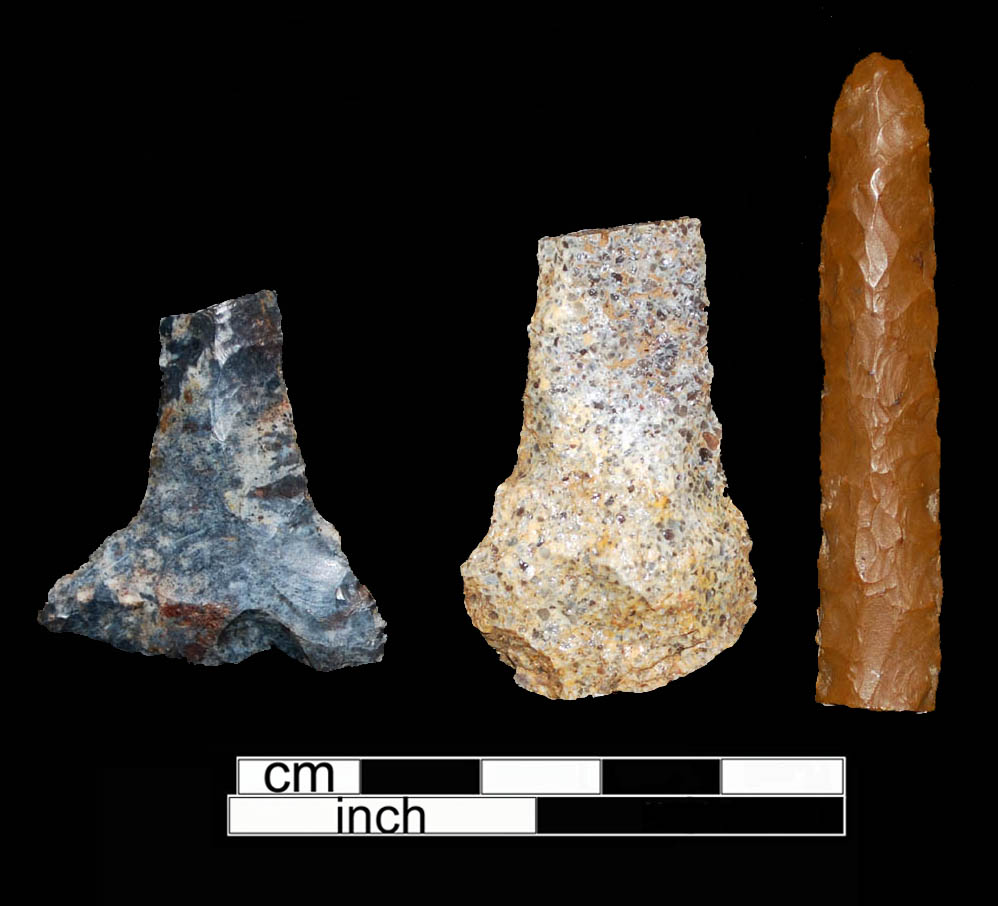
Drills
Credit: The George Washington Foundation