Researching Enslavement at Ferry Farm
From 1738 to 1772, enslaved men, women, and children lived at Ferry Farm under the social and legal control of the Washingtons. The Washington family depended on enslaved labor to build and support their household, farms, and business enterprises. Slavery was dependent on a framework of violence, as a systematic method for maintaining authority. Enslaved people resisted bondage in a variety of ways including revolt, self-emancipation, work slowdowns, and sabotage.
Documentation related to those enslaved at Ferry Farm originates largely from court documents that contain a narrow range of information about individuals such as the name, age, gender, and assigned value. After that the historical record is largely silent. Fortunately, archaeology can provide a great deal of information about the daily lives of those enslaved at Ferry Farm.
Court Records
Several lists of individuals who were enslaved at Ferry Farm exist in the colonial Virginia court records. They show that the farm’s enslaved community was bequeathed through both the Washington and Ball lines, but the majority were owned by Augustine Washington Sr. His death in 1743 and subsequent Will detailed what was to happen to the Ferry Farm slave community. That distribution was recorded on November 2, 1750, as the enslaved community was broken apart and divided amongst Mary Ball, George, Samuel, John Augustine, and Charles Washington. Betty had already received the 2 enslaved women bequeathed to her as part of Augustine Sr.’s will. As the minor Washington boys came of age, they removed their human chattel from Ferry Farm. Examining these lists helps researchers understand the makeup of slave communities and the transient nature of slavery in colonial Virginia.
Archaeology
Archaeology at Ferry Farm reveals other types of information specifically about the enslaved communities at Ferry Farm and about the nature of slavery in colonial America. This discipline is excellent in delineating the daily lives of those enslaved including understanding the landscape where they worked, lived, and socialized. To date, Ferry Farm archaeologists have uncovered the remains of a slave quarter and what appears to be the kitchen/quarter where the enslaved cook worked and lived. Archaeologists also excavated the workspace where the assistant cook butchered and dressed fowl, fish, and mammals, and afterwards washed the dirty dishes from the kitchen and the Washington table.
Archaeological excavation also recovers material goods that illustrate some of the belief systems held by enslaved men, women, and children. Cowrie shells, which functioned as status symbols and money in West Africa, were unearthed near the Washington house. These shells embellished the hair of enslaved women who worked around the house.
Archaeologists also unearthed a pierced coin that once adorned the neck or ankle of an occupant of the slave quarter to ward off bad luck or health issues. Also found was a carnelian bead, manufactured in India and exported as a trade item. Once exported to West Africa, only high-ranking members of society possessed the beads as they were considered as a prestige good. Slave traders quickly realized that these beads were in great demand, and this realization allowed for access to the African economy as exchange items that could be traded for captives. As part of the Middle Passage, Carnelian beads ended up in and around Colonial American port towns. While no longer monopolized by African rulers or slave traders, these beads appear to have retained their role as a prestige good in colonial coastal areas.
By combining the written record and archaeological evidence, researchers at Ferry Farm can develop an understanding of the daily lives of those whose history was thought to be lost. These datasets are complimentary and the information that they hold can be combined to provide a richer understanding of the lives of those enslaved at Ferry Farm.
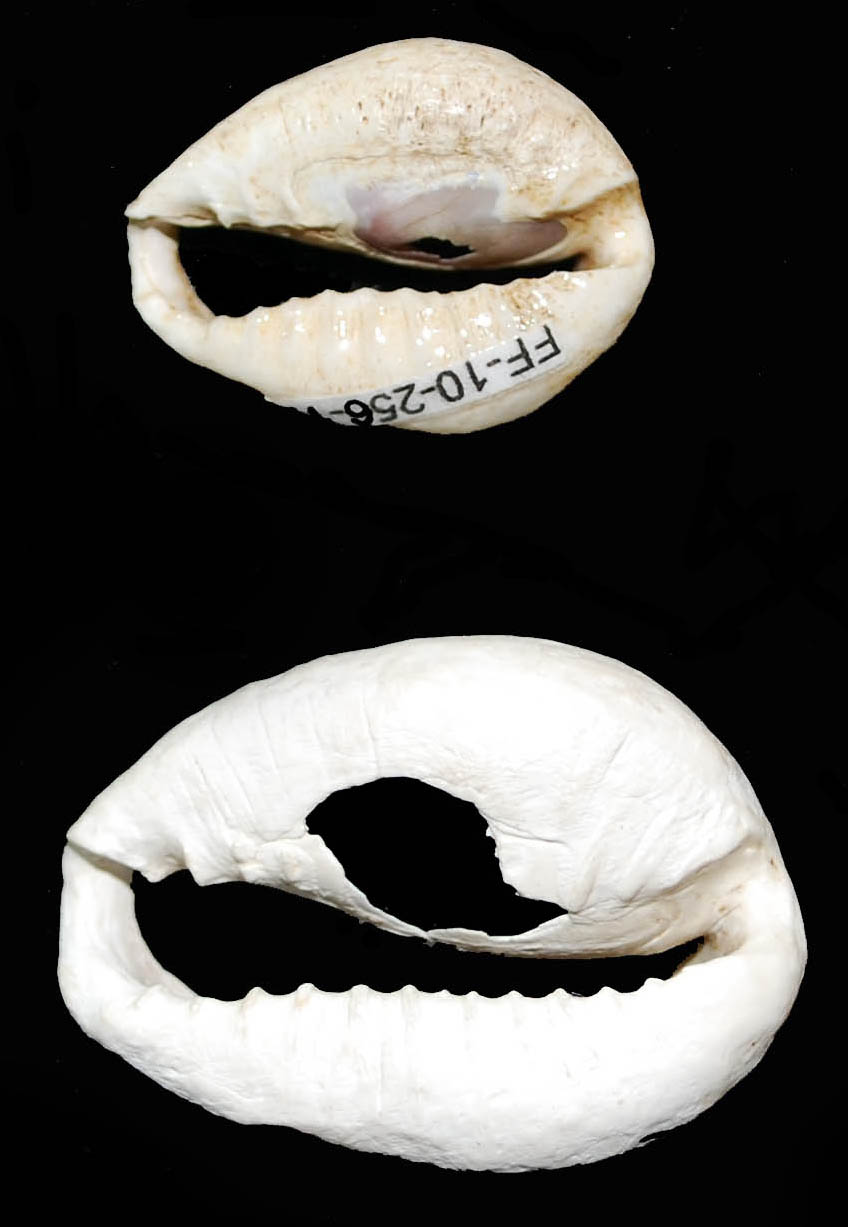
Cowrie Shells
Credit: The George Washington Foundation
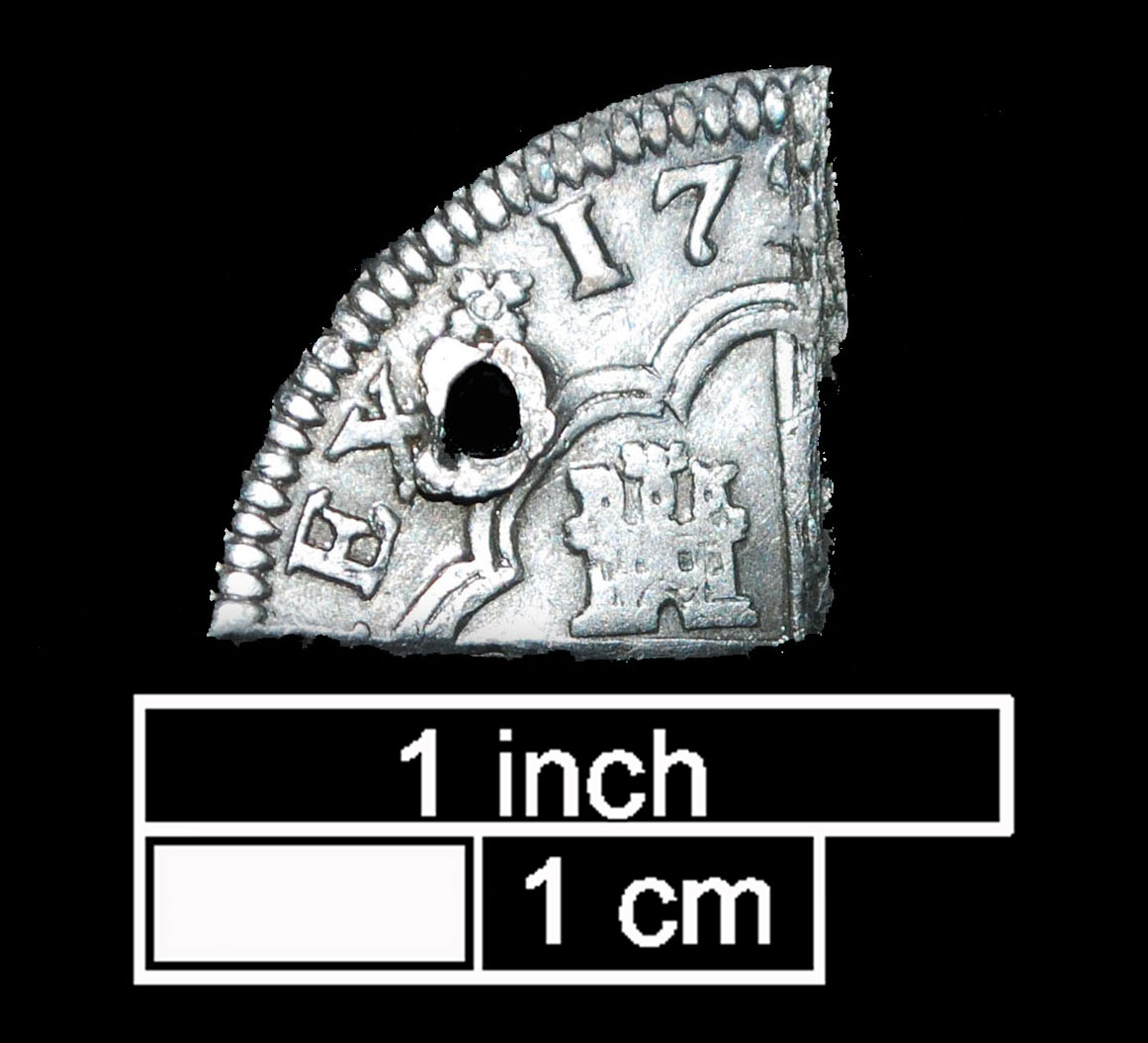
Pierced Coin
Credit: The George Washington Foundation
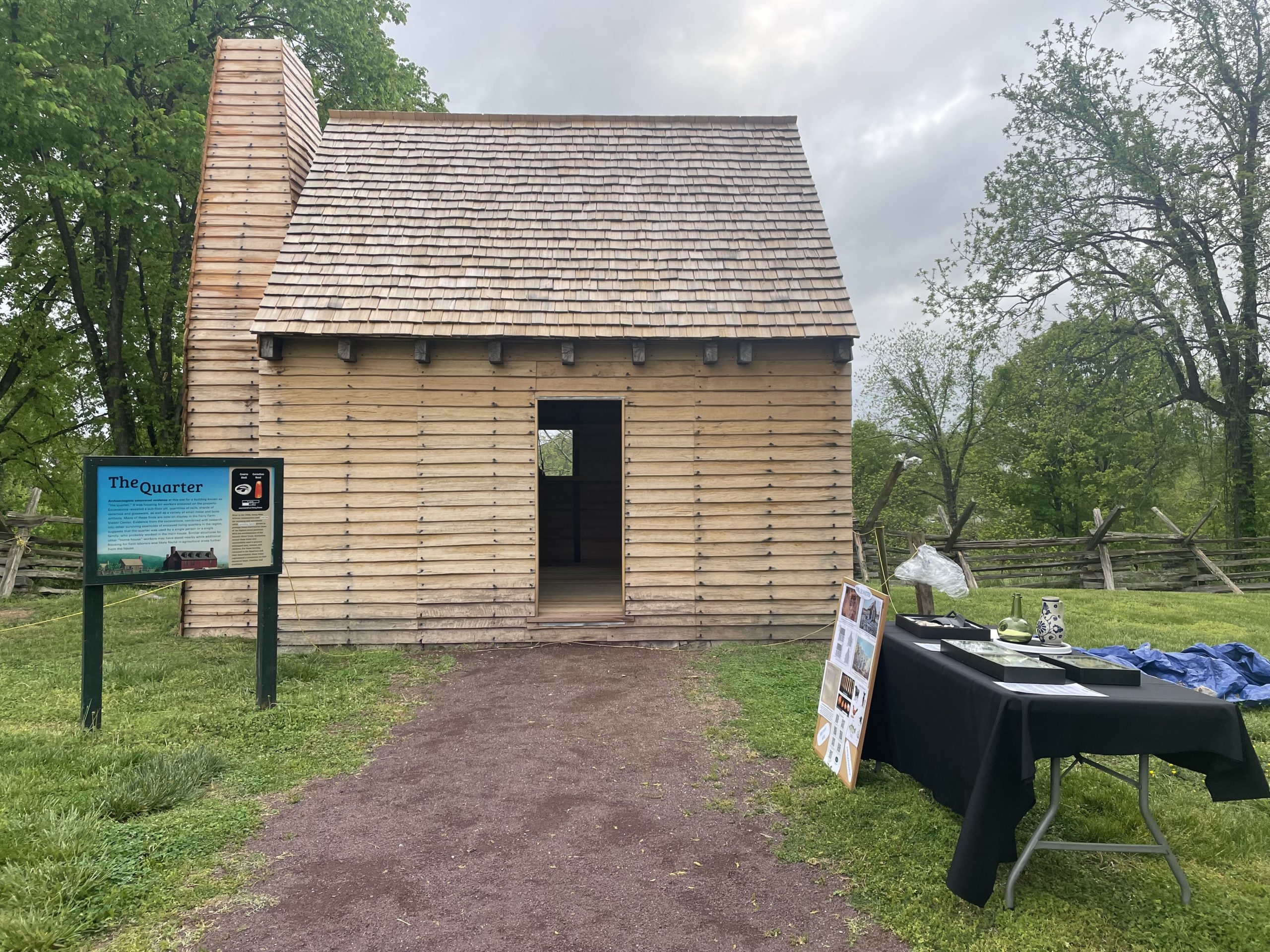
Quarter
Credit: The George Washington Foundation
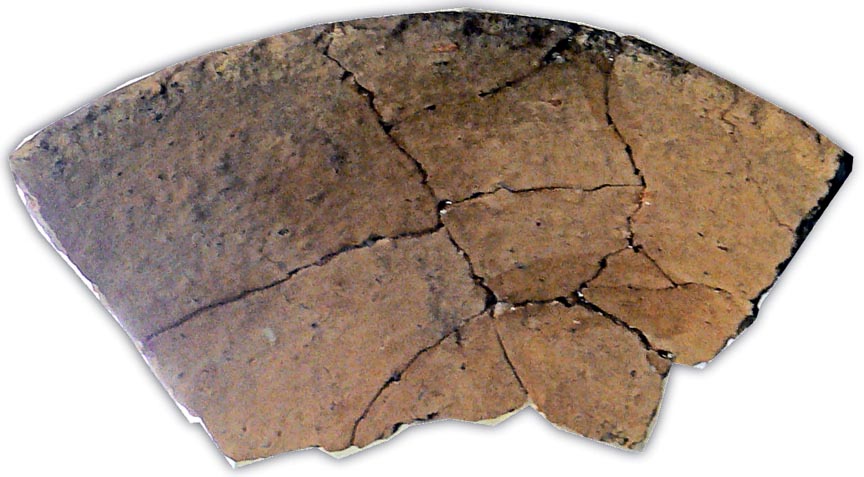
Colonoware
Credit: The George Washington Foundation